
Basement moisture planning
Waterproofing starts
with the source of water.
Plan around the observed condition—not a product selected from a photograph.
Exterior waterproofing, step by step.
How a typical exterior foundation waterproofing job is sequenced on a clean, protected site. Materials and details are specified for each house after the moisture source is diagnosed.
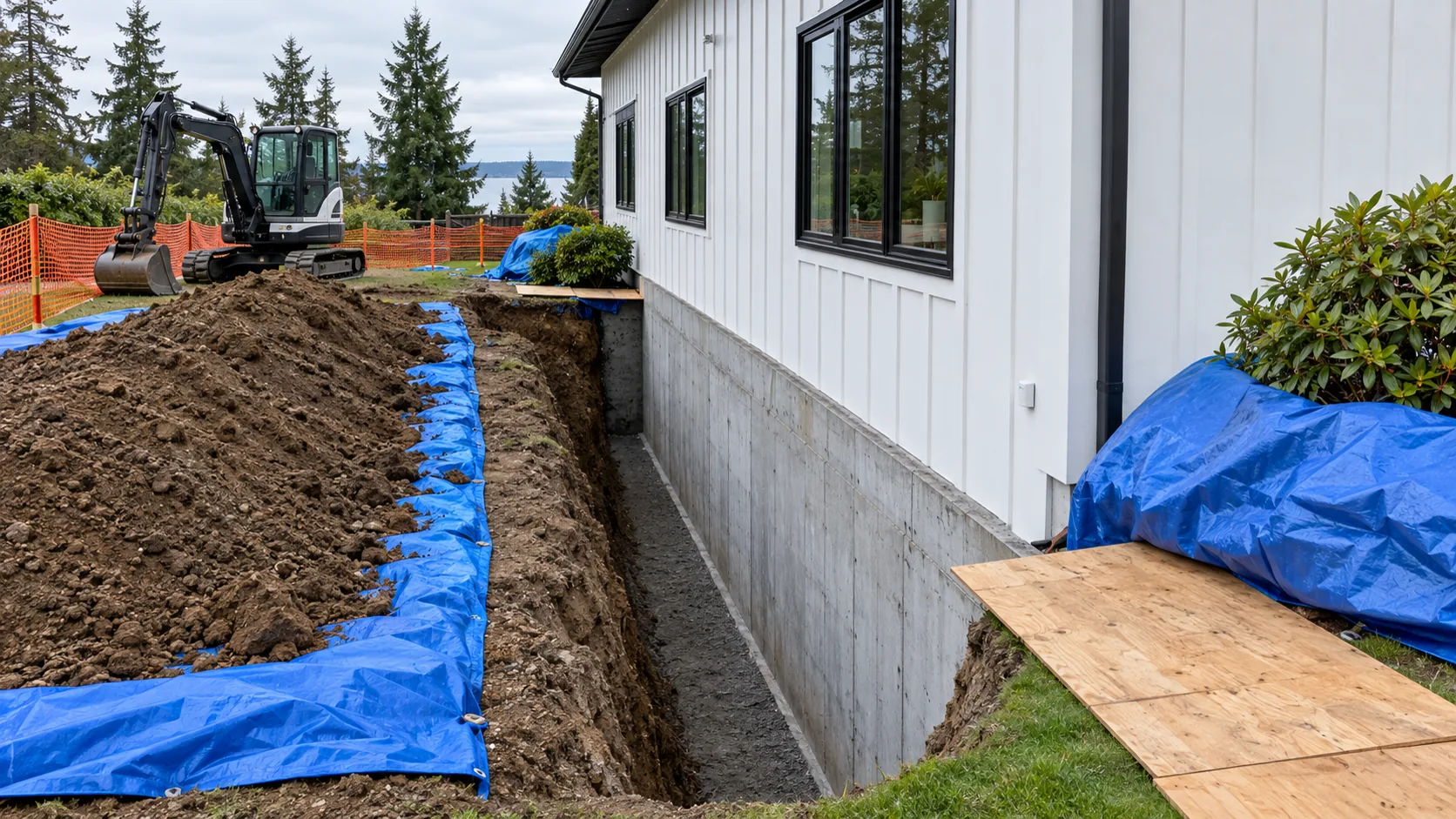
Step 1
Protect & excavate
Landscaping is protected, soil is kept on tarps, and a trench is dug down to the footing.
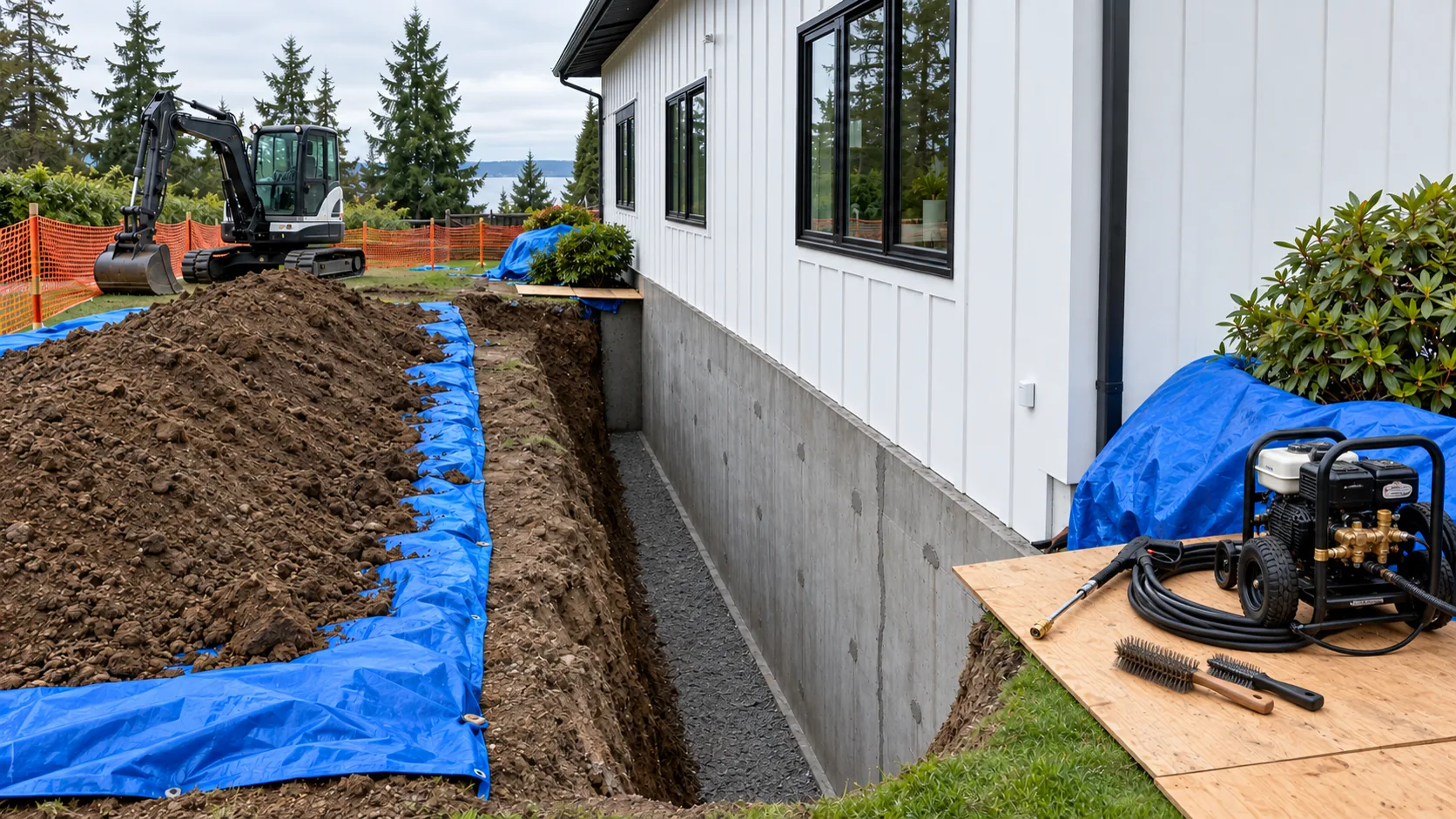
Step 2
Clean & repair
The wall is washed; form-tie holes and cracks are patched so the membrane can bond.
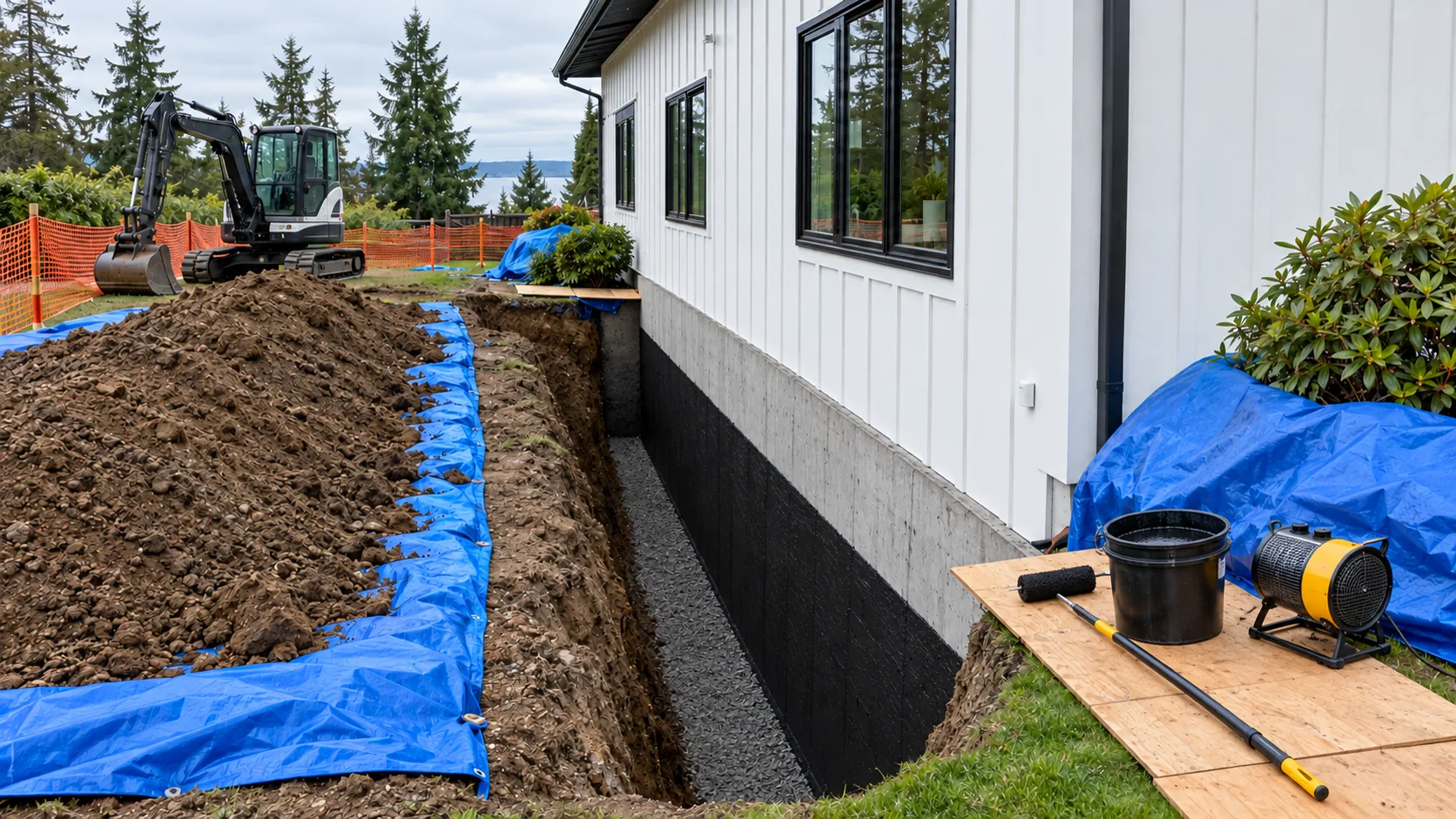
Step 3
Dry & prime
The wall is allowed to dry, then a primer is applied for adhesion.
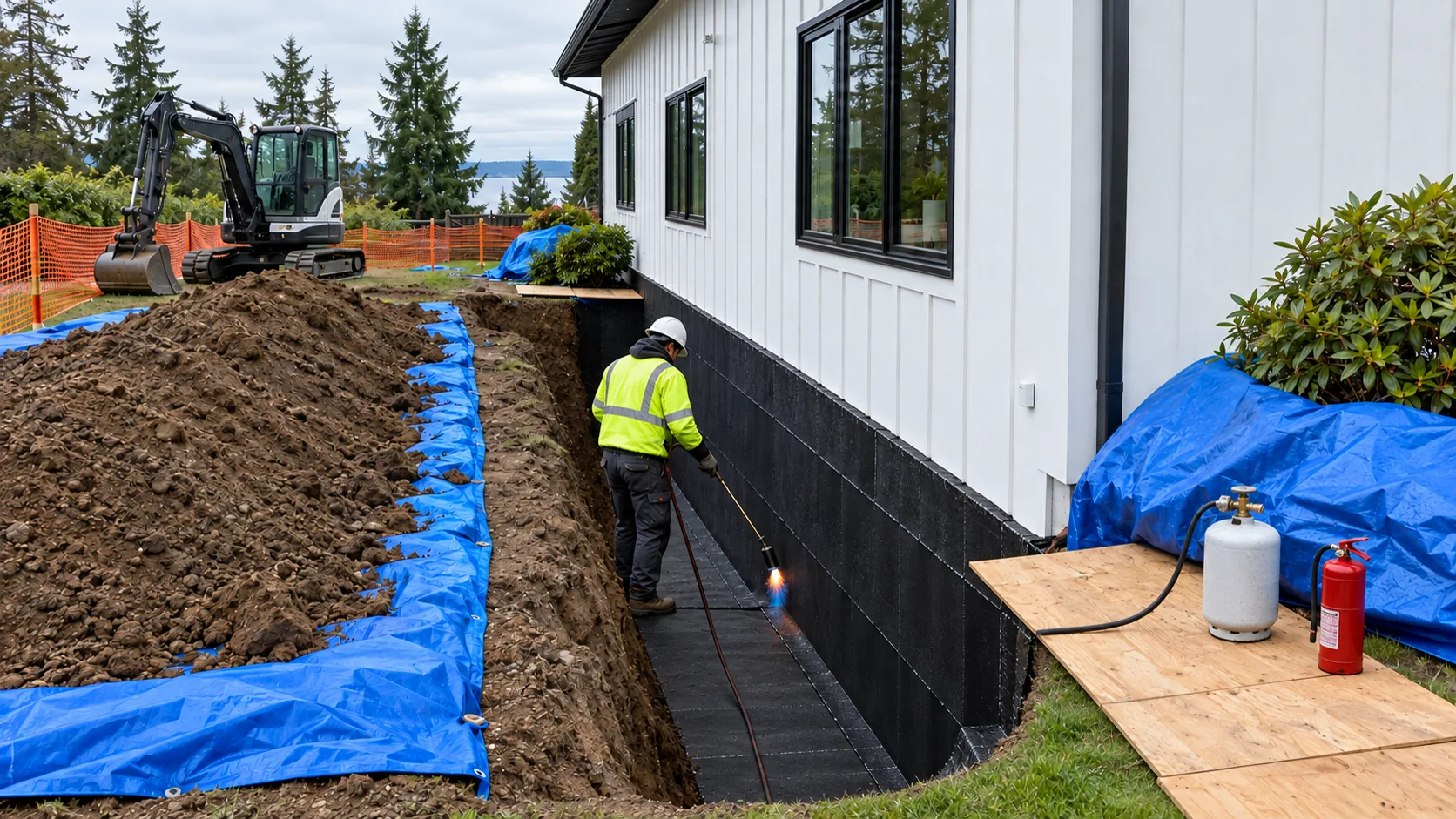
Step 4
Waterproofing membrane
Membrane sheets are lapped shingle-style from the footing to grade — torch-applied, self-adhered or liquid, as specified.
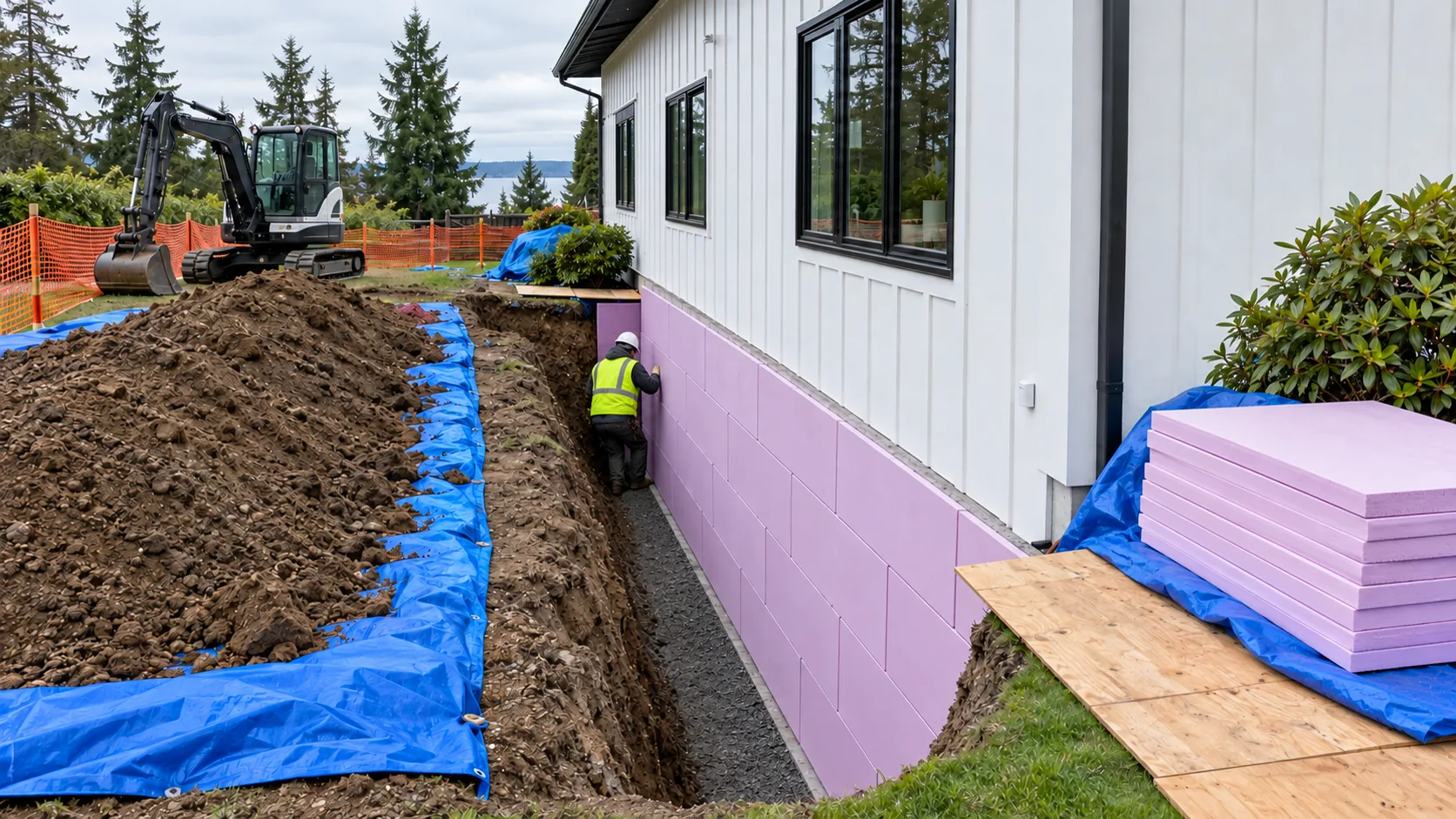
Step 5
Rigid insulation
Rigid foam boards protect the membrane and keep the foundation wall warmer.
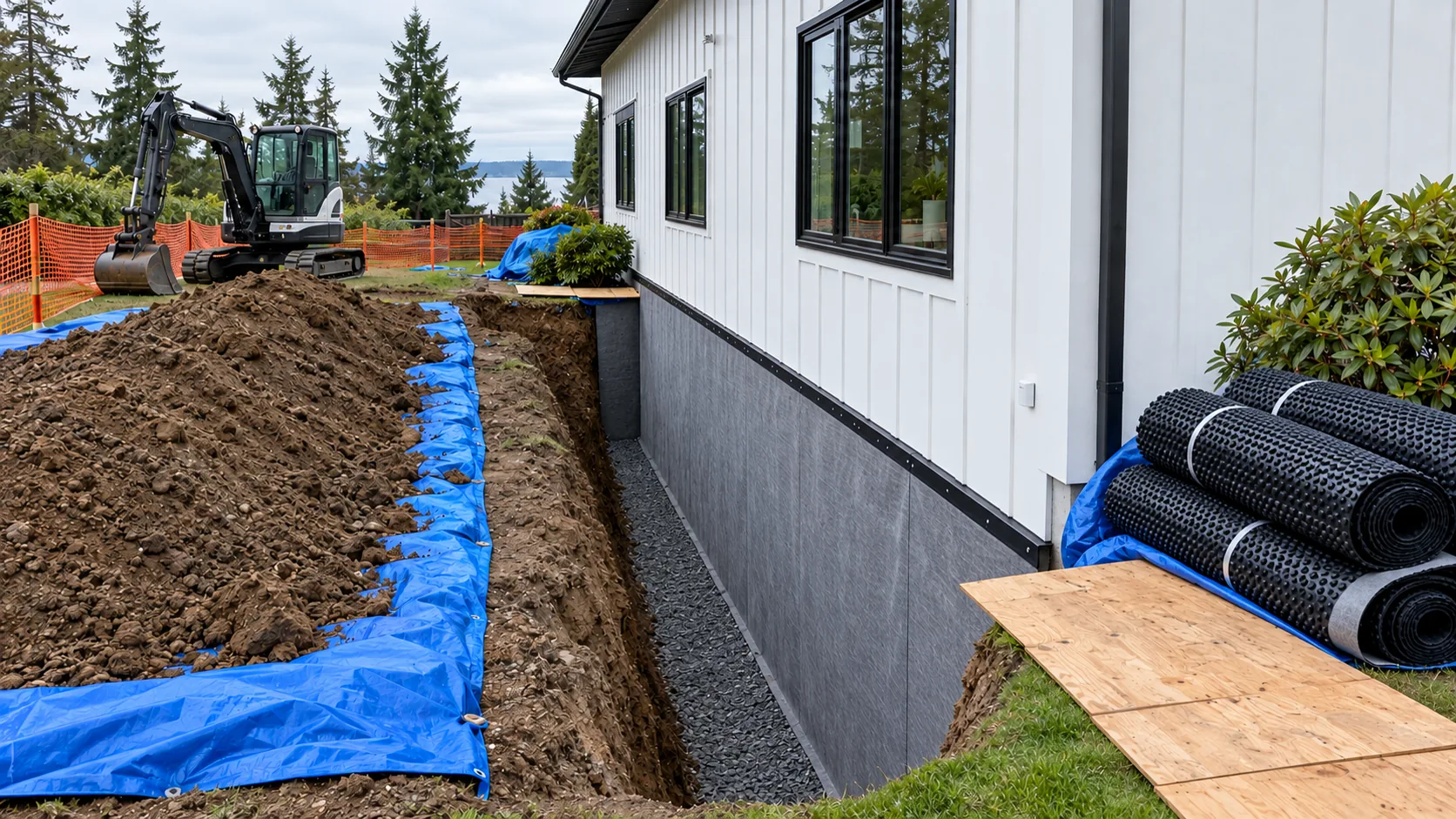
Step 6
Drainage board
A dimpled drainage mat relieves water pressure and guides water down to the drain.
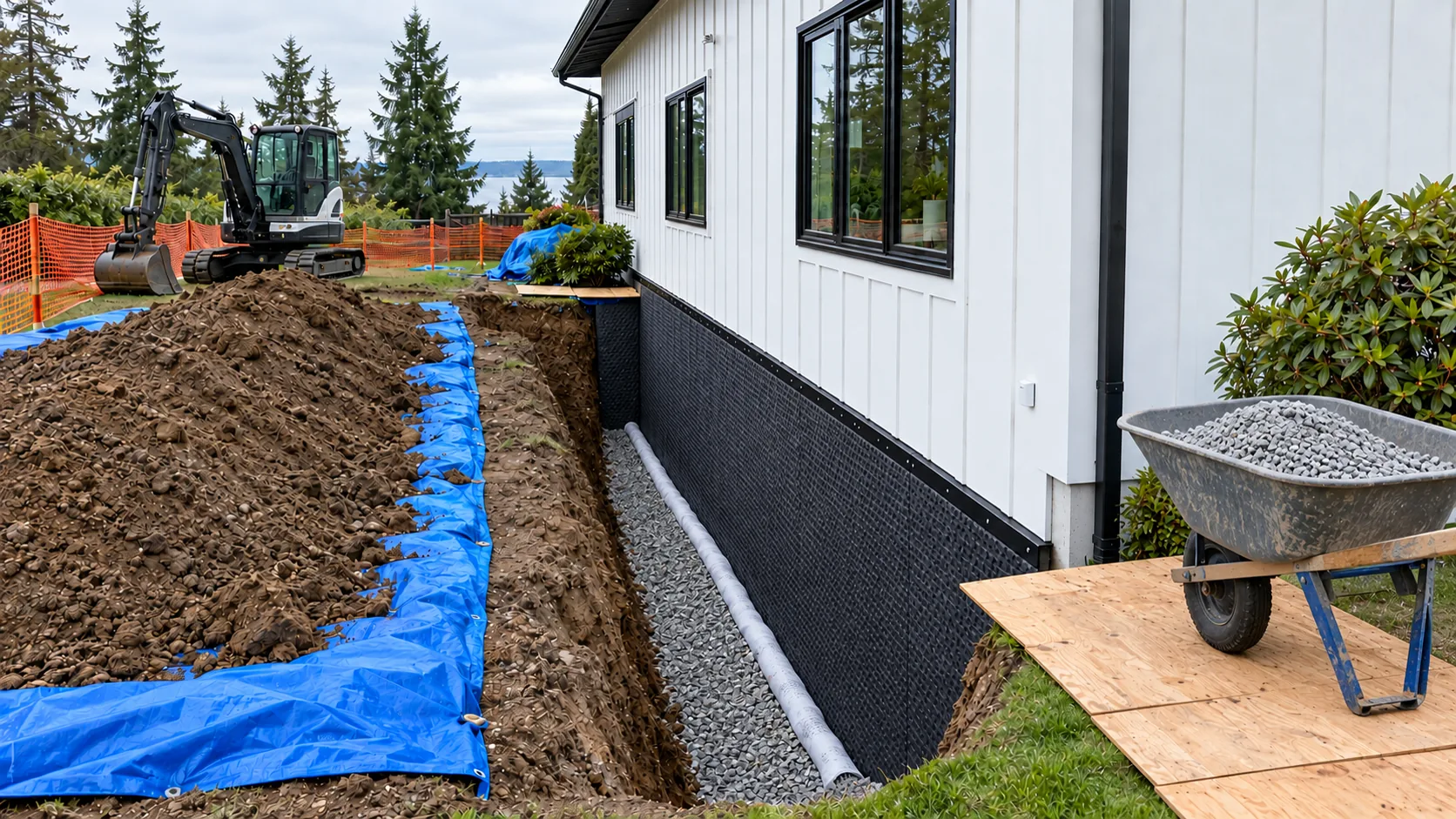
Step 7
Footing drain
Perforated pipe in washed gravel and filter fabric, sloped to a sump or daylight outlet.
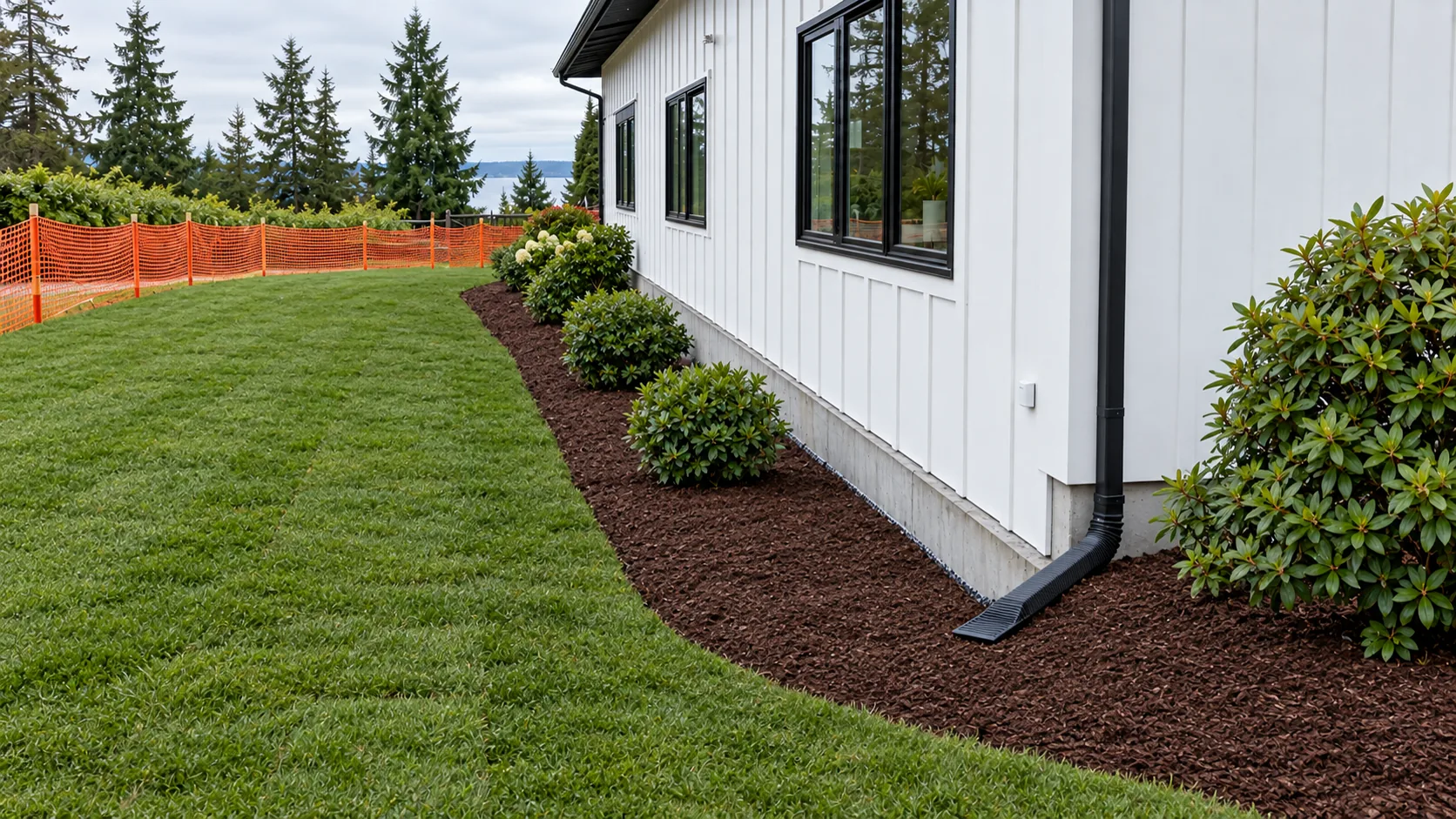
Step 8
Backfill & grade
Backfill is compacted in lifts, soil is sloped away from the house and landscaping is restored.
AI-generated illustrations of a typical sequence · Not a completed Alpha Lux project. Sources: Home Depot, Natural Resources Canada, Building Science Corporation.
A dry-looking room is not a resolved water problem
Basement waterproofing should begin with the condition you are trying to address. Bring photographs of affected areas, when dampness appears and a record of previous repairs if available. Photographs help frame the conversation, but do not establish a diagnosis.
Different moisture sources call for different questions
EPA identifies leaks and seepage, water directed toward a house, and indoor moisture as possible sources. A useful investigation may consider downspout discharge, outside water flow, foundation and slab symptoms, service leaks and condensation. These are questions to evaluate—not instructions to excavate or install one system at every house.
EPA moisture-control guidance · EPA remodeling guidance
Define what the proposal covers
Ask whether proposed work is inside, outside or both; which conditions it addresses; what access is needed; and what remains outside the contract. If drainage, excavation, structural repairs, pumps or plumbing are considered, identify design, trade and permit responsibilities before work starts.
Do not treat a coating, dehumidifier or new floor as a universal substitute for addressing the source. Any performance commitment or warranty must be stated in the project agreement; this page does not promise that every basement can be made permanently leak-free.
Connect water-control work to the finished room
The planned office, lounge or proposed guest room affects access and how later walls, built-ins and flooring relate to the agreed work. Discuss what should be documented before finishes conceal surfaces and what maintenance or observation is appropriate afterward.
Local review and contact
The current service list includes Bellevue, Kirkland, Seattle, Kenmore, Bothell, Woodinville, Redmond, Sammamish, Issaquah, Newcastle, Mercer Island, Medina, Clyde Hill, Shoreline, Lake Forest Park, Edmonds and Lynnwood. Describe the property city, intended use and main moisture concern through the existing contact route. A conversation about scope is not a guarantee of price, approval or a particular repair method.
Frequently asked questions
Will a dehumidifier fix a leak?
Reducing moisture in air and repairing water entry are different tasks. The observed source needs evaluation before a response is chosen.
Can the walls be finished first?
EPA advises resolving moisture problems before later work in a living-space conversion. Do not use a fresh wall finish to hide unresolved symptoms.
Do design images show waterproofing details?
No. Any AI concepts are illustrations for possible room use, not evidence of hidden construction, a waterproofing system or a completed project.
A place to begin