
Kirkland Window Replacement: Keep the Opening or Change It?
Plan Kirkland window replacement by checking the opening, permit qualifications, product references and scope questions before making design commitments.
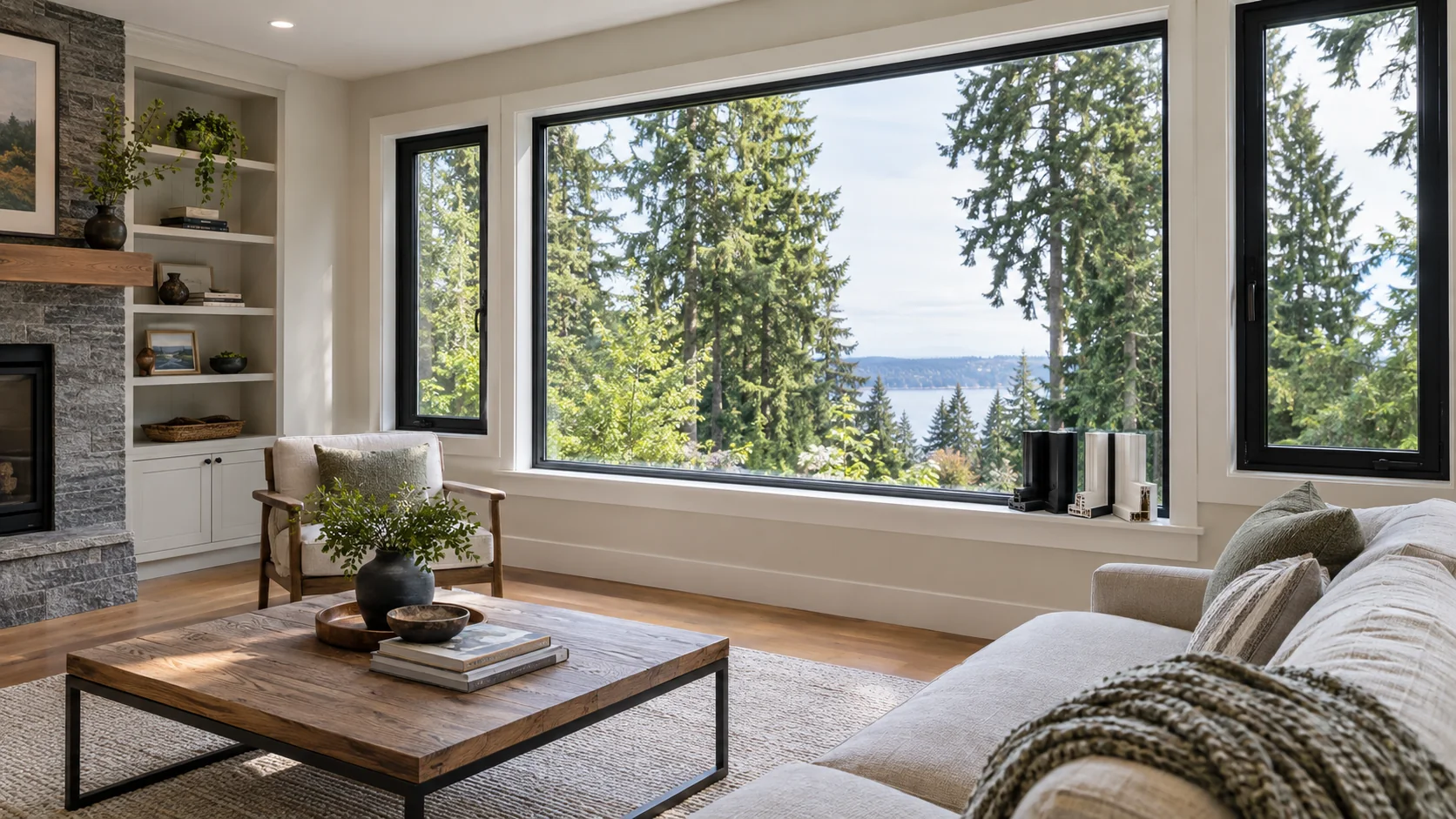
Kirkland window replacement can mean keeping the existing opening and exchanging a window, or changing the opening as part of a broader design decision. The distinction affects what you need to plan, ask, and confirm before work begins.
Short answer: If the goal is a like-kind replacement, start by comparing the existing opening and the proposed window as a matched scope. If you want a different size, location, or configuration, treat that as a separate design and permit question (City of Kirkland). In Kirkland, new window openings require permits, while the like-kind replacement exemption has important qualifications (City of Kirkland).
Start with the decision: same opening or a new one?
Imagine a hypothetical Kirkland homeowner looking at a tired window in a living room. One option is to replace it in kind, keeping the opening and its general arrangement. Another is to consider a larger or differently placed window to change the room’s appearance. Those are different project scopes, even if both begin with the same existing window.
Write down what you want to change before discussing products: the view, daylight, operation, exterior appearance, or the room’s relationship to the outdoors. Then separate each goal from the solution you first pictured. If the goal is more light, for example, ask whether a different glass appearance or frame choice could help meet the design goal without changing the opening. That is a question for the project team, not a promise that a particular product will achieve a specific result.
A useful first worksheet has two columns: “keep” and “change.” Under “keep,” note the opening, location, and overall arrangement you hope to retain. Under “change,” list any desired adjustment and why it matters. This makes it easier to compare alternatives without blending a straightforward replacement with a more involved design change.
Kirkland window replacement and permit questions
Kirkland’s permit guidance says like-kind replacement windows can be exempt from a permit, while new window openings require permits (City of Kirkland). The exemption does not apply when work alters existing accessibility features or takes place in a critical area such as a flood, wetland, steep-slope, or shoreline area (City of Kirkland). Exempt work must still comply with other applicable codes (City of Kirkland). Confirm current requirements and the actual parcel jurisdiction before work begins.
For a hypothetical project that keeps the existing opening, ask whether the proposed scope truly fits the city’s like-kind replacement description. For a project that creates a new opening, plan to ask about the permit process before treating the design as settled. If the proposal changes an existing opening without creating a new one, do not assume the answer from the label “replacement”; describe the actual change and confirm how it is treated.
Also identify whether accessibility features could be affected and whether the parcel is in a critical area. These are not details to wave away because the window looks ordinary from inside the room. A good planning note records the address, the intended scope, these potential qualifiers, and the city’s current guidance. The city’s page is the reference for Kirkland, not a rule to copy into a project in another jurisdiction.
Compare appearance choices with the whole assembly
A window’s visible style is only one part of the choice. A hypothetical owner might compare two options that look similar from the street but differ in how the window operates, how its frame appears, or which product features matter to the household. Another owner might be choosing between preserving a familiar exterior look and changing the room’s visual character. Start with those distinctions rather than assuming that the most noticeable feature tells the whole story.
Ask the project team to explain what is included in the proposed window assembly and what the installation scope covers. Clarify whether the written description identifies the product, the opening it is intended for, and the related work being proposed. Then ask what is excluded or depends on a condition that cannot be confirmed from the initial discussion. These are planning questions, not a prescribed construction method.
A useful comparison sheet separates “appearance” from “scope.” Under appearance, record frame look, visible divisions, operation, and how the choice relates to the home. Under scope, record what is being replaced, whether the opening remains the same, and which decisions still need confirmation. Keeping these columns apart helps prevent a preferred look from being mistaken for a complete project description.
Ask what “like-kind” means for your proposal
The phrase “like-kind replacement” can sound simple, but a homeowner still needs to describe the actual proposal clearly. For example, in a hypothetical living-room project, is the intention to keep the existing window opening and replace the window, or to adjust the opening to accommodate a different arrangement? Avoid relying on a product label or a contractor’s shorthand when the proposed work itself is what needs review.
Prepare a small scope note with the window’s room, its current arrangement, the change you want, and anything you hope will remain unchanged. A photo or sketch may help a project discussion, but it does not establish permit status or prove that a particular design is suitable. Ask the team to identify any assumptions in its description and to flag questions that need confirmation with Kirkland.
If the answer depends on whether a feature counts as accessibility-related or whether the parcel falls within a critical area, keep that issue open until it is checked (City of Kirkland). Kirkland says the like-kind exemption does not apply when existing accessibility features are altered or work is in a listed critical area (City of Kirkland). The city also says exempt work must still comply with other applicable codes (City of Kirkland).
Use product ratings as a comparison tool, not a shortcut
When comparing candidates, an owner may want a consistent way to review product information. The National Fenestration Rating Council’s Certified Products Directory lists certified windows, doors, and skylights, with filters for product type and features (NFRC Certified Products Directory). It can help you locate and compare listed products, but it does not establish that a specific installation is approved, certify an installer, or guarantee a particular energy-savings result (NFRC Certified Products Directory).
For a hypothetical comparison, choose the features you care about before looking through listings. You might be weighing product type, appearance, or an operating style that fits the room. Keep a record of the exact product information discussed, then ask how the proposed selection relates to the project scope. If an energy claim is part of the conversation, ask what it is based on and avoid treating a directory listing as a promise about your household’s future results.
The counterintuitive distinction is that a product credential and an installation decision answer different questions. A directory can help identify product information; it cannot tell you whether a chosen window fits your opening, whether the project needs a permit, or whether a contractor has a specialist certification. Keep product research, permit confirmation, and installer review as separate checklist items.
Decide which appearance details matter most
Before choosing a style, rank the visual details that matter in your home. A hypothetical owner might care most about how the exterior looks from the sidewalk, while another may put the room’s interior character first. Someone else may value a particular way of opening the window. There is no need to turn those preferences into a technical claim; they are simply useful criteria for narrowing choices.
Make a short preference sheet with three headings: “must keep,” “open to changing,” and “need to see.” For example, you may want to keep the home’s general exterior character, remain open to a different frame appearance, and need to compare how different arrangements look in the room. Ask the project team to explain trade-offs in plain language and to identify which choices affect the opening or the proposed scope.
A picture or concept image can help you discuss design direction, but it should not be treated as proof of a finished project or a promise that a particular result will match your home. Ask what assumptions the visual example uses and what still needs to be selected. This keeps the conversation grounded in your actual property and reduces the chance that an attractive image quietly replaces a clear written description.
Build a written scope that can be compared
A window discussion becomes easier to evaluate when each proposal describes the same decisions (Washington L&I: Hiring a Contractor). Washington L&I recommends checking a contractor’s credentials and current registration, bond, and insurance through its verification resources (Washington L&I: Hiring a Contractor). It also recommends obtaining at least three written bids, comparing them carefully, and using a written contract whose terms the homeowner understands (Washington L&I: Hiring a Contractor). Registration does not establish every specialist certification or guarantee the quality of a particular project (Washington L&I: Hiring a Contractor).
For a hypothetical bid comparison, use the same written scope when speaking with each contractor. Ask each to identify the intended product or selection process, whether the opening stays as it is, what work is included, and what remains uncertain. If one proposal includes a design change while another assumes a like-kind replacement, mark that difference instead of comparing the totals as though the scopes match.
Keep a question column beside each proposal: “What does this term mean?”, “What is excluded?”, and “Which assumptions should we confirm?” Do not fill gaps with guesses about payment terms, warranties, schedules, or inspection obligations. Ask for any important explanation to be reflected in writing, and take time to understand the contract before agreeing. The goal is a comparison you can explain to another household member, not a rushed choice based on a single headline feature.
Consider older paint and suspect materials before work
Material questions belong in early planning, not as a surprise after a project is underway. The EPA says paid renovation that disturbs paint in pre-1978 housing and covered child-occupied facilities generally falls under Renovation, Repair and Painting firm-certification and trained-worker requirements (EPA: Renovation, Repair and Painting Program). EPA distinguishes that program from lead-abatement work, and the rules have different considerations for owner do-it-yourself work, rentals, childcare, and house flipping (EPA: Renovation, Repair and Painting Program).
In Washington, check the state credential path as well as the federal background: the Department of Commerce administers the state RRP program, and an EPA- or other-state-certified individual must register with Commerce (Washington Department of Commerce). Commerce also publishes certified RRP-firm lists separately from its link to general contractor verification (Commerce homeowner resources). Ask the proposed project team which current firm and individual credentials apply to the specific work instead of treating a general registration number as proof of RRP status.
Washington L&I says building owners and construction contractors share responsibility for asbestos testing (Washington L&I: Asbestos Certification). Before work that could disturb suspect materials, its guidance calls for a good-faith asbestos survey by an AHERA-certified building inspector, regardless of building age (Washington L&I: Asbestos Certification). The survey must be available to bidding contractors and affected subcontractors and workers (Washington L&I: Asbestos Certification). If asbestos-containing materials could be affected, the guidance calls for a certified asbestos contractor (Washington L&I: Asbestos Certification).
For a hypothetical home where a window project could affect older finishes or other suspect materials, ask what material concerns should be reviewed before bids are finalized and who will confirm the required qualifications. Do not identify a material by appearance or assume a house is exempt because it seems newer. Keep this as a coordination question for qualified parties, not a do-it-yourself sampling or removal task.
Use local discussion for questions, not conclusions
A 2025 post in r/Kirkland asked how to find a dependable local general contractor for minor woodpecker-damage repair and an interior door (Reddit r/Kirkland). That post supports a practical topic for homeowners: matching the contractor search to the work being discussed (Reddit r/Kirkland). It does not establish how often those problems occur, diagnose a particular home, verify a contractor, or provide a technical rule for window replacement (Reddit r/Kirkland).
For a hypothetical window project, use the same distinction. A neighborhood post may suggest questions to ask, but it cannot confirm a permit exemption, a material condition, a product’s suitability, or a contractor’s current credentials (Washington L&I: Hiring a Contractor). Verify credentials through the state resources, compare written scopes, and confirm Kirkland requirements for the actual address and proposal (Washington L&I: Hiring a Contractor).
You can still use local conversations as a prompt to clarify your own needs. If you are comparing contractors for a small, defined scope, ask each one to describe the work it is responding to. If your project includes a design change or uncertain conditions, say so clearly at the start. Keep the final decision tied to your property, written scope, and verified information rather than the confidence or popularity of an online comment.
A practical FAQ for the planning conversation
Does a like-kind replacement always avoid a permit in Kirkland? The city says like-kind replacement windows can be exempt, but the exemption does not apply if the work alters existing accessibility features or occurs in a critical area such as a flood, wetland, steep-slope, or shoreline area (City of Kirkland). Exempt work still must comply with other applicable codes (City of Kirkland). Confirm current requirements and the actual parcel jurisdiction.
What if I want a new window opening? Kirkland’s guidance says new openings for windows require permits (City of Kirkland). If the proposal changes an existing opening rather than creating a new one, describe the actual scope and ask the city how it is treated instead of assuming the like-kind exemption applies (City of Kirkland).
Does an NFRC listing approve the installation? No. The directory is a product-information tool; it is not proof that a particular installation is approved, that an installer is certified, or that a household will achieve a promised energy-savings percentage (NFRC Certified Products Directory).
What should I bring to a first discussion? Bring the property address, the room or windows involved, a clear description of what you hope to keep or change, and the questions you want answered. If you are ready to talk through the next step, bring that information to a project discussion with Alpha Lux Renovations. Confirm current city requirements for the actual parcel before work, and use the conversation to clarify scope, product choices, and what still needs verification.
This guide is general planning information, not engineering, legal or permit advice for a specific property. Confirm requirements with your local jurisdiction and qualified professionals.